
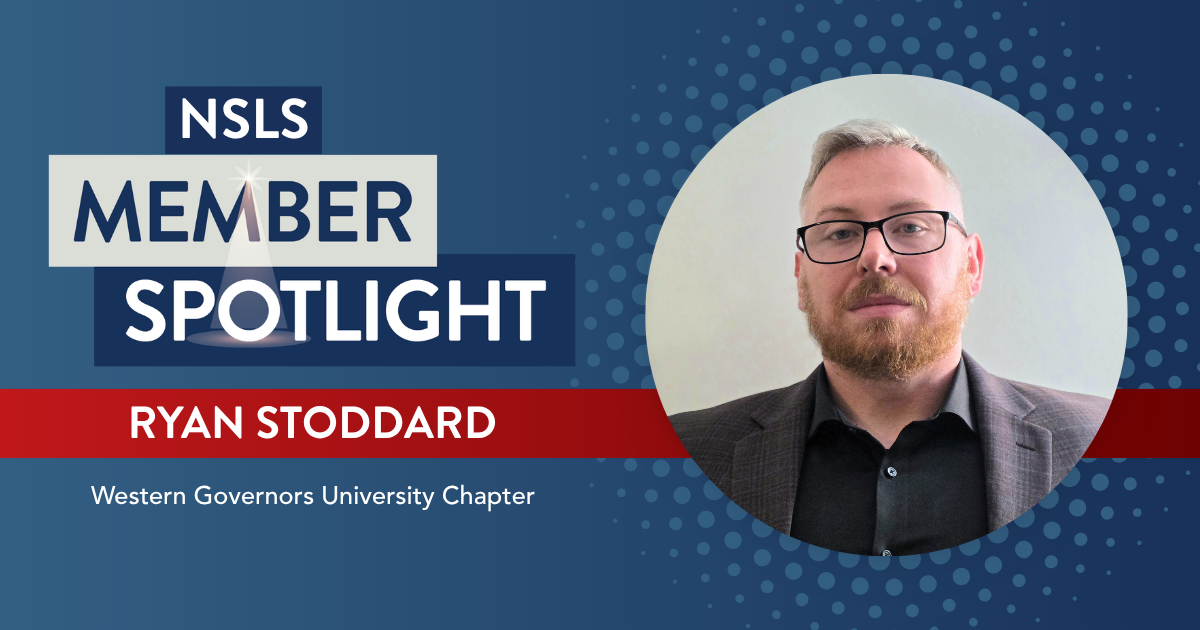
Ryan Stoddard built a career in some of the most high-stakes environments in cybersecurity. He did it without a blueprint and without a support system in place from the start, leaning on hard work and long hours to get to his goals.
A Western Governors University graduate with several degrees spanning cybersecurity and information technology, Stoddard's path runs from five years of service in the United States Marine Corps to his current role as global threat and vulnerability management manager at Equifax. In 2025, that trajectory earned him a feature in Marquis Who's Who, followed by inclusion in Marquis Who's Who Top Executives, a recognition reserved for professionals who have demonstrated exceptional achievement and contribution to their field.
His story is a lesson in building something from the ground up, even if at first you're climbing alone.
From the Marines to the Frontlines of Cybersecurity
Before corporate firewalls and vulnerability programs, there was the Marine Corps. Stoddard spent five years in service, completing two deployments and finishing as an S3-E manager accountable for more than $15 million in mission-essential equipment. His specialty was signals intelligence, where he oversaw intelligence operations, the systems that supported them, and the people trained to carry them out.
That foundation carried into his first civilian cybersecurity role. At Scientific Research Corporation, Stoddard contributed to building and rebuilding secure system infrastructure now relied on by more than 2,000 Marines around the world, work he counts as among the most meaningful of his career, and one that extended his sense of service well beyond his time in uniform.
From there, he moved through roles at Reyes Holdings as both a cyber threat responder and senior vulnerability analyst before landing at T-Mobile as a senior cybersecurity engineer. There, he drove results that speak for themselves: hundreds of thousands of security gaps closed across thousands of systems, zero incidents tied to vulnerabilities, and millions of users' data better protected because of it. T-Mobile recognized that performance with the Q2 T-Defender Award in 2024.
Skills That Drive Results
Recognition doesn't come from technical skill alone. Stoddard is clear on what has mattered most in his growth as a leader: soft skills.
"Communication," he says. "The largest driving factor in my success has been my willingness to communicate and listen to others, especially during stressful times."
Alongside communication, two other qualities have shaped how he works and leads. Drive, he says, keeps him moving toward the next opportunity to grow, opening doors he never anticipated. The third quality is one that sets effective leaders apart from simply effective technicians.
"Empathy has allowed me to always evaluate the other side when faced with a problem and has allowed me to identify solutions or outcomes that bias would have prevented otherwise," he says.
In cybersecurity, where high-pressure situations are routine and decisions affect entire organizations, that combination of soft skills is essential in a leadership role.
Building a Strong Foundation from Scratch
Stoddard's path was not a straight line, and it was not easy, having experienced homelessness three times before adulthood. He earned his degrees while working full-time, often exceeding 50 hours a week, all while caring for his family.
He earned an Associate of Science in cybersecurity from Hawaii Pacific University in 2020, followed by a Bachelor of Science and then a Master of Science in cybersecurity and information assurance from Western Governors University, completing both in 2021 and 2022. He is currently pursuing a second master's degree in information technology management at WGU, with an expected completion this year.
That academic drive was fueled by a conviction shaped early in his career. A piece of advice from his time in the Marines has stayed with him ever since.
"No one cares about your career but you," he says. "While that sounds straightforward, it's only half true. We have plenty of mentors and guides along this journey, but if you don't advocate for yourself, if you don't speak up and push, you will never go anywhere."
The Value, and Skill, of Humility
Asked which leader he looks up to, Stoddard doesn't land on a tech titan or a military commander. He points to Marcus Aurelius, and to one specific decision the Roman emperor made.
"His hiring of an assistant to tell him, 'You are just a man,' despite being emperor stuck with me at a young age and taught me the importance of remaining humble and understanding no matter my accomplishments or deeds in life," he says.
For someone who has earned the kind of credentials and recognition Stoddard has, that commitment to humility isn't performative. It's a practice, the same kind of intentional check he applies to his own leadership today. No title is bigger than one's humanity.
RELATED: ADAM GRANT ON THE IMPORTANCE OF ASKING FOR ADVICE
Closing the Gaps That Matter
At Equifax, Stoddard oversees how the organization identifies, ranks, and responds to vulnerabilities, working across teams to make sure the right gaps get closed in the right order. From day one, he approached the role with the same intentionality that has defined his career.
But there is no summit to leadership, and always more work to be done, especially in cybersecurity. One of his long-term professional goals speaks directly to a challenge the entire industry faces.
"I want to help solve the algorithmic prioritization of vulnerabilities based on environmental factors," he says. "I want to help drive risk down in a measurable, replicable way despite organization size. Attackers have the edge in that they can go all out, whereas defenders are constantly playing catch up. This will help close the gaps that matter faster."
His second long-term goal is more personal.
"I want to help more people gain access to learning and education," he says. "I believe learning is one of the most critical factors to success and it's not available to everyone in the same capacity, and I want to help change that where I can."
That vision extends to a plan to build a collaborative learning community where individuals interested in cybersecurity can learn and grow together.
Climbing Together: The True Meaning of Leadership
For Stoddard, the NSLS program has reinforced something inside of him that has kept him going, climbing, and reaching for higher goals.
"Leadership can often be one of the loneliest roles in an organization," he says. "Knowing that there are others out there striving to do the same and grow like I am helps remind me that I am not alone. We are stronger because we have each other."
That sense of shared purpose aligns with how he understands leadership at its core.
"Leadership is setting a standard and an example, allowing those around you to shine in the same manner, and enforcing those expectations when they aren't met," he says. "Leadership is a tough thankless road but one that must be walked so that we can be better tomorrow than we are today."
Ryan's Advice for Future Leaders
Stoddard has seen what separates the leaders who earn lasting loyalty from those who don't. The distinction comes down to teamwork, empathy, and being an advocate.
"Leadership isn't only about the title and the respect. It's about the duty to your team to advocate for them and empower them," he says. "All of the failed leaders I have had in my career shared one major trait: they cared more about themselves than they did the team."
His advice: don't focus on just your outcomes. Focus on the outcomes of others.
"If you take care of your team first," he says, "your team will take care of you."
Meet another tech trailblazer next. Corin Manning was named Outstanding Student of the Year in her school and is on a path to bring a mentorship-driven coding camp to kids.